
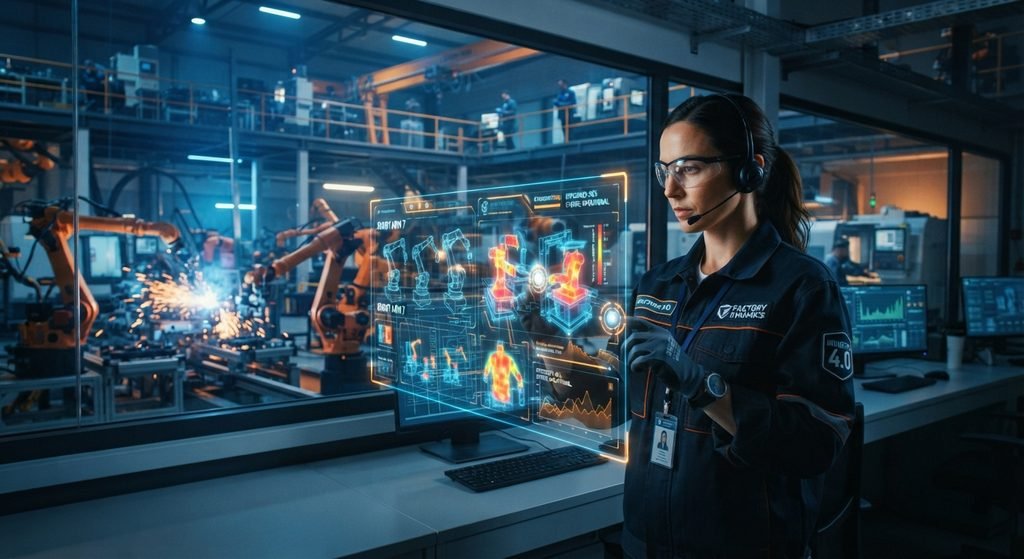
Over the past decade, the Internet of Things (IoT) and its industrial counterpart, the Industrial Internet of Things (IIoT), have evolved from experimental concepts into the indispensable digital backbone of modern global infrastructure. From smart energy grids and automated manufacturing plants to remote asset monitoring and predictive health systems, IoT connects the physical world to digital analytical engines.
If you are an engineer, system architect, operations manager, or tech strategist, understanding how IoT functions, why it is shaping the future of technology, how it captures markets, and what structural advantages it provides is critical for long-term professional and operational success.
1. What is IoT and How Does It Actually Work?
At its core, the Internet of Things (IoT) refers to a vast, interconnected network of physical objects—”things”—embedded with sensors, software, network connectivity, and processing capabilities. These devices collect, exchange, and act upon real-time data from their physical environment without requiring continuous human-to-human or human-to-computer intervention.
The Four-Tier Architecture of an IoT System
To understand how an IoT ecosystem functions from end to end, we must break down its architecture into four distinct layers:
+-----------------------------------------------------------------------+
|                    FOUR-TIER IoT SYSTEM ARCHITECTURE                  |
+-----------------------------------------------------------------------+
|  TIER 1: PHYSICAL SENSORS & ACTUATORS                                 |
|  - Measures Temperature, Pressure, Vibration, Optical Data, Flow      |
|  - Converts physical states into electrical signals                   |
+-----------------------------------------------------------------------+
                                   |
                                   v
+-----------------------------------------------------------------------+
|  TIER 2: EDGE COMPUTING & GATEWAY LAYER                               |
|  - Aggregates and filters raw telemetry streams                       |
|  - Performs protocol translation (Modbus, MQTT, OPC-UA)               |
+-----------------------------------------------------------------------+
                                   |
                                   v
+-----------------------------------------------------------------------+
|  TIER 3: CLOUD INFRASTRUCTURE & DATA STORAGE                          |
|  - Scalable time-series databases and cloud servers                   |
|  - Long-term historical data archiving                                |
+-----------------------------------------------------------------------+
                                   |
                                   v
+-----------------------------------------------------------------------+
|  TIER 4: ANALYTICS, DASHBOARDS & ACTION                               |
|  - Machine learning engines & predictive maintenance algorithms        |
|  - Enterprise dashboards, mobile alerts, and automated BMS controls   |
+-----------------------------------------------------------------------+
- Sensors and Actuators (The Physical Edge): Sensors measure real-world variables—such as temperature, pressure, proximity, strain, or acoustic emissions. Actuators take digital instructions and perform physical actions, such as closing a valve or shutting down a motor.
- Edge Gateways and Local Processing: Because raw sensor data generates massive volumes of information, edge gateways sit close to the physical assets. They filter noise, translate industrial communication protocols (e.g., converting Modbus or PROFIBUS to MQTT or HTTPS), and perform initial low-latency calculations.
- Cloud & Enterprise Storage: Data packets travel via cellular, Wi-Fi, satellite, or wired networks into cloud-hosted platforms or on-premise servers. Here, massive time-series databases store historical telemetry securely.
- Analytics and Application Layer: Software applications process the data through artificial intelligence (AI) and machine learning (ML) engines. Dashboards visualize trends, flag anomalies, and trigger automated workflows or human interventions.
2. How IoT is Capturing Global Markets
The market adoption of IoT has accelerated exponentially. Driven by the lower cost of microprocessors, widespread availability of high-speed wireless connectivity (such as 5G Standalone networks and Wi-Fi 6E), and the urgent demand for operational efficiency, the Industrial Internet of Things (IIoT) market continues to expand at a rapid compound annual growth rate (CAGR).
- Market Valuation & Growth Velocity: Global market intelligence reports value the broader Industrial IoT market well into hundreds of billions of dollars, with projections pointing toward multi-trillion-dollar economic value across manufacturing, energy, logistics, and smart city infrastructure over the coming decade.
- Shift from Hardware to Services: While initial market growth was dominated by physical hardware sales (sensors, gateways, and ruggedized edge servers), the market has matured significantly. Today, the fastest-growing revenue sector comprises services, cloud platforms, connectivity subscriptions, and software-defined automation suites. Enterprises no longer just want hardware; they want turnkey outcome guarantees, cybersecurity compliance frameworks, and predictive intelligence packages.
- Geographic Expansion: While North America and Europe pioneered early enterprise IoT rollouts, the Asia-Pacific (APAC) region—led by robust manufacturing ecosystems in China, India, Japan, and South Korea—represents one of the fastest-growing market segments, driven by rapid industrial automation and infrastructure modernization.
3. Why IoT is Essential for the Future
The transition toward ubiquitous connectivity is not a temporary trend; it is a structural evolution across global industries. IoT is foundational for several reasons:
+-----------------------------------------------------------------------+
|                     WHY IoT DRIVES THE FUTURE                         |
+-----------------------------------------------------------------------+
|  PREDICTIVE OVER REACTIVE   |  Eradicates costly unplanned downtime   |
|                             |  by forecasting failures weeks ahead.   |
+-----------------------------+-----------------------------------------+
|  DATA-DRIVEN DECISIONS      |  Replaces gut-feel maintenance schedules|
|                             |  with real-time empirical evidence.     |
+-----------------------------+-----------------------------------------+
|  RESOURCE SUSTAINABILITY    |  Optimizes energy grids, cuts carbon    |
|                             |  emissions, and reduces material waste. |
+-----------------------------+-----------------------------------------+
|  AUTONOMOUS OPERATIONS      |  Enables lights-out manufacturing and   |
|                             |  remote unmanned facility management.   |
+-----------------------------------------------------------------------+
1. Eradicating Unplanned Downtime through Condition Monitoring
Historically, industries operated on fixed calendar maintenance schedules—servicing machines whether they needed it or not. IoT shifts this model entirely to Condition-Based Monitoring (CBM) and Predictive Maintenance (PdM). By continuously tracking vibration signatures, thermal expansion, and electrical loads, IoT systems warn operators of bearing wear, misalignment, or electrical anomalies long before catastrophic failure occurs.
2. Bridging Operational Technology (OT) and Information Technology (IT)
For decades, plant floor machinery (OT) operated in complete isolation from business analytics systems (IT). IoT acts as the universal translator, securely bringing real-time machine performance data into corporate enterprise resource planning (ERP) systems, allowing executives and engineers to make unified, data-driven decisions.
3. Sustainability and Energy Optimization
With global pressures to reduce carbon footprints and optimize energy consumption, IoT smart grids and sub-metering networks track real-time power draws across facilities. Automated loops shut down idle machinery, adjust HVAC loads based on occupancy, and minimize resource waste on a massive scale.
4. Key Advantages of Implementing IoT Systems
Deploying a robust IoT architecture yields profound operational, financial, and safety advantages for organizations:
- Maximized Asset Utilization & ROI: Continuous tracking ensures machinery operates at peak efficiency, extending asset lifecycles and delaying the need for expensive capital replacements.
- Drastically Reduced Operating Costs: By catching minor inefficiencies, leaks, or component degradation early, companies save millions in emergency repair bills, ruined product batches, and labor overtime.
- Enhanced Workplace Safety and Environmental Compliance: Hazardous industrial environments (such as chemical plants, offshore oil rigs, and high-pressure boilers) use IoT gas detectors, continuous emission monitors, and pressure sensors to automatically isolate leaks or shut down processes, protecting human life and preventing ecological disasters.
- Agile Supply Chain Visibility: IoT container trackers monitor real-time location, shock, and temperature for sensitive goods (such as pharmaceuticals and perishable foods) from factory floor to final delivery.
5. Challenges and Considerations in Modern IoT Deployments
Despite its overwhelming benefits, deploying scalable IoT systems presents unique engineering challenges that require careful management:
- Cybersecurity Vulnerabilities: Connecting millions of field devices to the internet creates a wider attack surface. Organizations must implement zero-trust architectures, end-to-end encryption, and hardware-secured root-of-trust modules.
- Data Overload and Bandwidth Constraints: Streaming millions of raw data points to the cloud consumes excessive bandwidth and incurs high storage costs. Implementing Edge Computing—where local gateways analyze data and only transmit actionable summaries or anomalies—solves this bottleneck.
- Interoperability and Protocol Fragmentation: Different legacy industrial machines speak proprietary languages. Standardization efforts around protocols like MQTT, OPC-UA, and open API frameworks are vital to ensure seamless device communication.
🚀 Advance Your Engineering & Technical Documentation Career
Mastering modern automation frameworks, IoT integration strategies, and international engineering compliance requires specialized knowledge. But you do not have to navigate the transition alone.
At Free Documents Hub, we specialize in providing expert remote training, professional standard operating procedures (SOPs), and complete technical documentation services for engineering facilities worldwide. Whether you are designing smart plant architectures, drafting safety compliance manuals, or upgrading operational frameworks, our services bridge the gap between academic theory and real-world industrial success.
Explore Our Digital Resources:
- Visit Our Store on Gumroad: https://iftakhar.gumroad.com/
- Visit Our Store on Payhip: https://payhip.com/b/pLP7W
📩 Get in Touch: Need customized system design documentation, technical drafting support, or want to claim a FREE trial sample for your facility? Contact our engineering team today at contact@freedocumentshub.com!