
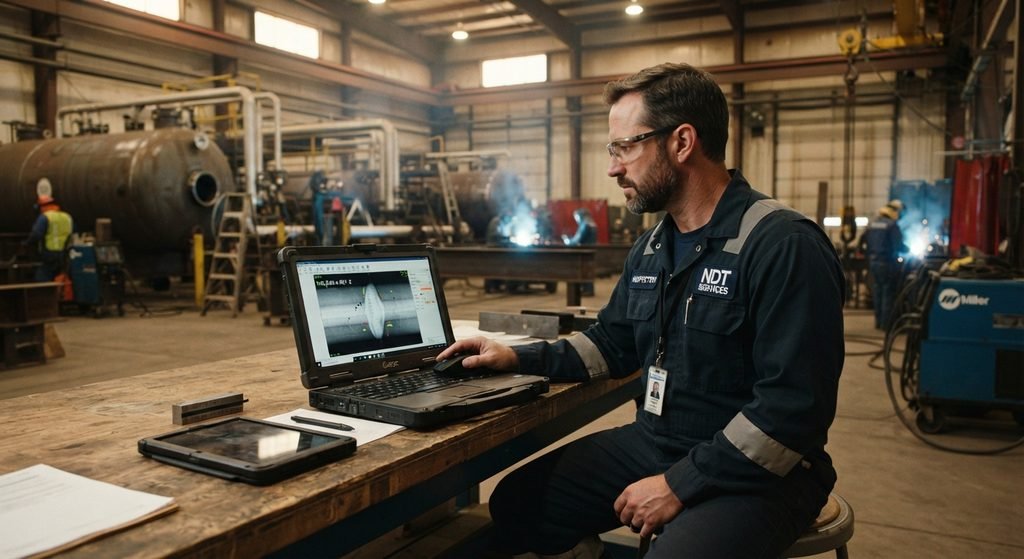
For nearly a century, industrial radiography has served as the bedrock of structural safety and non-destructive testing (NDT). From verifying the integrity of high-pressure pipelines in oil and gas refineries to checking critical aerospace components for sub-surface volumetric flaws, radiographic testing (RT) has saved countless lives by identifying hidden internal defects before they can lead to catastrophic structural failure.
Historically, this critical inspection process meant relying heavily on industrial X-ray film, darkrooms, and chemical processing solutions. However, the industrial inspection landscape is experiencing a massive paradigm shift. Propelled by rapid advancements in sensor technology, computing power, and digital imaging software, Digital Radiography (DR) systems are aggressively replacing traditional film-based techniques across global engineering landscapes, manufacturing yards, and fabrication shops.
If you are an NDT technician, a welding inspector, a quality assurance (QA) manager, or an asset integrity engineer, understanding the shift from traditional Film RT to modern Digital Radiography is no longer optional—it is a modern operational necessity. This comprehensive guide breaks down the technical mechanisms of both inspection methods, compares their core metrics head-to-head, and explains why digital systems are rapidly taking over the industry.
1. Introduction to Industrial Radiography & The Digital Shift
In heavy industrial manufacturing, high-pressure piping fabrication, and pressure vessel construction, verifying the internal integrity of welds and critical parent materials is non-negotiable. Radiographic Testing (RT) is one of the most powerful Non-Destructive Testing methods used to detect internal volumetric flaws such as porosities, slag inclusions, internal cracks, and lack of fusion or penetration.
For decades, Film Radiography (Film RT) served as the gold standard of industrial inspection. However, with advancements in sensor technology and tightening regulatory requirements under codes like ASME Section V (Article 2), the industry is experiencing a profound paradigm shift. Modern inspection teams are increasingly transitioning from traditional chemical-based film to Digital Radiography (DR) and Computed Radiography (CR).
Understanding the technical differences, operational costs, inspection speeds, and code compliance aspects of Digital Radiography vs. Film RT is essential for quality managers, welding inspectors, and plant operators aiming to optimize their NDT workflows.
2. Understanding Traditional Film Radiography (Film RT)
Traditional Film RT relies on exposing a specialized photographic film wrapped around a component to gamma radiation (emitted from isotopes like Iridium-192 or Cobalt-60) or X-rays generated by portable or fixed X-ray tubes.
The Film RT Workflow
- Setup & Geometry: The radiation source is positioned on one side of the weldment or component, and the photographic film cassette (backed with lead screens to absorb backscatter radiation) is strapped securely to the opposite side.
- Exposure: The radiation beam passes through the material. Areas of lower density or volume loss (such as a crack or porosity pocket) absorb less radiation, exposing the film more intensely in those spots.
- Chemical Processing: The exposed film cannot be viewed immediately. It must be carefully taken to a darkroom (or a mobile darkroom van on-site) and processed using liquid chemical baths—consisting of developer, fixer, wash water, and dry cycles.
- Interpretation: Once dried, inspectors view the radiograph on a high-intensity illuminated viewer box to manually detect, measure, and evaluate flaws against acceptance criteria.
Advantages and Limitations of Film RT
- Advantages:
- Extremely high inherent spatial resolution offered by traditional silver halide grains.
- A universally accepted, time-tested historical compliance benchmark recognized globally by code authorities and long-term asset owners.
- Limitations:
- Time-Consuming: Chemical processing introduces significant delays (often 15 to 30 minutes or more per batch) before inspection results are available on the shop floor.
- Environmental & Health Hazards: Requires hazardous chemical handling, silver recovery management, and proper disposal of toxic developer and fixer solutions.
- Retake Costs: If an exposure is under- or over-exposed due to estimation errors, or if positioning is flawed, the entire exposure sequence must be repeated, causing project bottlenecks and costly downtime.
3. Understanding Modern Digital Radiography (DR & CR)
Digital Radiography eliminates physical film altogether, replacing it with electronic detectors or phosphor plates that convert radiation directly into high-resolution digital images. There are two primary forms utilized in modern industrial settings:
Computed Radiography (CR)
Computed Radiography uses a photostimulable phosphor (PSP) imaging plate instead of traditional film. The plate is exposed to radiation on-site exactly like film. However, instead of entering a darkroom chemical bath, the plate is fed into a laser scanner. The laser stimulates the phosphor crystals, releasing stored energy as light that is converted into a high-resolution digital image file. Once scanned, the plate is erased by a bright light source and can be reused thousands of times.
Direct Digital Radiography (DR)
Direct Digital Radiography (commonly referred to simply as DR) represents the absolute cutting edge of modern NDT. DR utilizes a rigid or semi-flexible Flat Panel Detector (FPD). These detectors contain a matrix of electronic pixels. When radiation strikes the detector, it is immediately converted into an electrical charge (either directly via an amorphous selenium sensor or indirectly using a scintillator coupled with an amorphous silicon sensor). Within fractions of a second (often 3 to 10 seconds), a highly detailed digital image appears directly on the technician’s laptop screen or field tablet. There is zero intermediate scanning step.
Advantages of Digital Radiography
- Instant Results: Digital images appear on the monitoring screen within seconds, allowing immediate weld acceptance or rejection right on the shop floor or construction yard.
- Wide Dynamic Range & Latitude: DR systems can capture areas of vastly varying thickness (such as a pipe wall and a thick weld cap) in a single exposure, drastically reducing retakes caused by minor exposure setting miscalculations.
- Enhanced Image Processing: Specialized software allows Level II and Level III inspectors to dynamically adjust contrast, zoom into specific regions, apply digital filters, and measure defect dimensions accurately.
- Digital Archiving & Cloud Sharing: Radiographs are stored securely as digital files, eliminating physical degradation, warehouse storage expenses, and enabling instant remote review by off-site Level III examiners or international clients.
4. Head-to-Head Comparison Matrix
When evaluated across real-world industrial key performance indicators (KPIs), the operational advantages of transitioning from film to modern digital systems become clear:
| Evaluation Parameter | Film Radiography (Film RT) | Digital Radiography (DR / CR) |
| Image Availability | Slow (Requires darkroom chemistry development; 15–30+ mins per batch) | Instant (Real-time viewable within 3–10 seconds) |
| Initial Capital Investment | Low (Basic cassettes, lead screens, basic chemical viewing equipment) | High (Requires specialized flat-panel detectors, software licenses, ruggedized hardware) |
| Consumables Cost | High recurring costs (Chemicals, film rolls, silver disposal fees) | Very Low (Reusable digital detectors and storage plates) |
| Dynamic Range | Narrow (Requires precise exposure time settings; high retake rate) | Extremely Wide (Tolerates exposure variations, virtually eliminating retakes) |
| Data Storage & Transfer | Physical filing cabinets, prone to environmental degradation or loss | Cloud-ready digital databases, lossless transmission, easy auditing |
| Code Compliance | Fully governed by ASME Sec V, Article 2 | Fully compliant under updated ASME Code Cases and mandatory appendices |
5. Code Compliance and Standards (ASME Section V & ISO)
Transitioning to digital inspection methods does not mean throwing out quality standards or compromising safety protocols. Regulatory bodies and code committees have established rigorous, mandatory criteria to ensure digital radiographs match or exceed the reliability, sensitivity, and repeatability of traditional film.
- ASME Section V, Article 2: Governs standard radiographic examination requirements. Recent code updates and mandatory appendices explicitly outline the qualification parameters for digital image acquisition, display hardware, geometric unsharpness limits, and long-term digital storage integrity.
- Image Quality Indicators (IQIs / Penetrameters): Just like film RT, digital systems must demonstrate required sensitivity using wire or plaque-type IQIs placed directly on the component. Signal-to-Noise Ratio (SNR) and Basic Spatial Resolution ($SR_b$) are critical metrics measured and documented to prove digital system capability during every shift.
- Personnel Qualification: NDT inspectors operating DR equipment or reviewing digital scans must hold valid, verified certifications under ASNT SNT-TC-1A, ANSI/ASNT CP-189, NAS 410, or ISO 9712 standards specifically endorsed for Radiographic Testing Level II or Level III proficiency.
6. Field Safety & Radiation Protection Protocols
Regardless of whether your project utilizes traditional chemical film or high-tech digital flat-panel detectors, radiation safety remains the single most critical priority on any industrial job site.
- The ALARA Principle: Always keep operational radiation doses As Low As Reasonably Achievable.
- Exclusion Zones: Establish clear, calculated controlled areas using physical barricades, flashing warning lights, and calibrated survey meters during isotope or X-ray generator exposures.
- Enhanced Radiation Safety with DR: Because digital sensors are significantly more sensitive to radiation than industrial film, they require far less radiation exposure time to produce a high-contrast image. This allows field inspection teams to utilize lower-output X-ray tubes or smaller radioactive sources, drastically reducing the safety exclusion zone perimeter on a busy worksite. In active manufacturing yards or fabrication facilities, minimizing the radiation boundary means surrounding trades can continue working safely without costly production downtime.
- Personal Dosimetry: All authorized industrial radiographers and assistant personnel must wear active direct-reading pocket dosimeters, alarming ratemeters, and thermoluminescent dosimeters (TLDs) or OSL badges at all times.
Summary: The Digital Future is Now
The transition from traditional Film RT to modern Digital Radiography is a natural, necessary evolutionary step for industrial quality control, asset integrity management, and modern fabrication. By replacing slow chemical darkrooms with instant digital acquisition, DR systems provide manufacturing and plant maintenance sectors with unprecedented speed, reduced operational overhead, enhanced radiation safety, and superior defect visibility.
As heavy industries continue to undergo rapid digital transformations, reliance on chemical film will continue to fade, solidifying Digital Radiography as the definitive modern gold standard for industrial X-ray inspection.
🎓 Advance Your Engineering Career with Free Training
Mastering the complexities of international design codes, non-destructive examination standards, and real-world industrial compliance takes time—but you do not have to do it alone.
At Free Documents Hub, we provide expert remote training specializing in all types of engineering, design, quality control, and technical documentation. Our remote programs are specifically built to bridge the gap between academic theory and real-world industrial application. Whether you are looking to master pressure vessel design formulas, perfect your fabrication blueprints, or understand international compliance and NDT inspection standards, we have you covered.
Ready to elevate your technical skills and stand out to top employers? Contact us today at contact@freedocumentshub.com to claim your free trial and kickstart your training journey!
🎓 Accelerate Your Engineering Career
At Free Documents Hub, we help engineers and inspectors bridge the gap between traditional education and field execution through specialized remote training and ready-to-use industrial templates.
🛠️ Explore Our Digital Resources:
- Gumroad Store: https://iftakhar.gumroad.com/[cite: 2]
- Payhip Store: https://payhip.com/b/pLP7W[cite: 2]
📩 Want to master international codes and upgrade your professional profile? Email us at contact@freedocumentshub.com to get started!